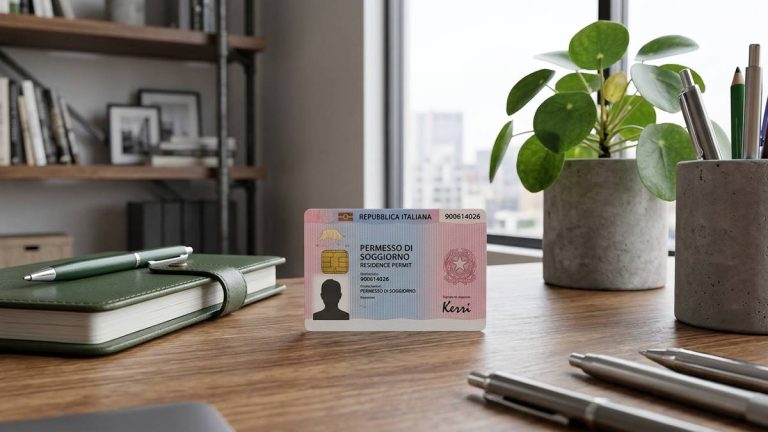


Italian Elective Residence Visa Requirements (2026): Passive Income, Assets vs. Cash Flow, Registered Housing & Health Insurance
Securing an Italian Elective Residence Visa requires satisfying one of the most rigorous legal standards in European immigration law. The visa is governed primarily by the Interministerial Decree of 11 May 2011 (Annex A, point 13), issued jointly by the Ministry of Foreign Affairs and the Ministry of the Interior. Under this statutory framework, the Italian State grants long-stay entry exclusively to foreign nationals who intend to establish their permanent residence in Italy without performing any active employment or self-employment, demonstrating independent, continuous, and stable financial resources.
In my legal practice, I frequently encounter applicants who assume that substantial liquid capital in a checking account or unverified remote income is sufficient to secure approval. That assumption is legally incorrect. Consular authorities do not merely inspect asset totals; they execute a forensic inquiry into the nature, stability, and future continuity of your revenue streams. To navigate this procedure successfully, an applicant must understand the strict legal distinctions governing the Italian immigration architecture.
The Legal Triad: Schengen Visa C, National Visa D, and Permesso di Soggiorno
A critical source of confusion among prospective expatriates is the relationship between short-stay travel authorizations, long-stay national visas, and in-country residence permits:
| Instrument | Legal Classification | Issuing Authority | Statutory Duration | Permitted Scope of Activity |
|---|---|---|---|---|
| Schengen Visa (Type C) | Short-stay uniform visa | Italian Consulate or Schengen partner | Maximum 90 days within any rolling 180-day window | Tourism, business visits, medical transit; strictly non-residential |
| National Visa (Type D) | Long-stay entry visa | Italian Diplomatic-Consular representation | Exceeding 90 days (typically 365 days) | Solely grants lawful border entry for the specific statutory purpose |
| Permesso di Soggiorno | In-country legal residence title | Territorial Police Headquarters (Questura) | Determined by decree (typically 1 year renewable) | Governs lawful residence on Italian territory and administrative rights |
The National Type D Elective Residence Visa is solely an entry title. It authorizes you to cross external borders into the Italian Republic for the express purpose of establishing residence. Once on Italian soil, the visa must be converted into a physical residence permit (Permesso di Soggiorno per Residenza Elettiva) by submitting the formal postal kit within eight business days of arrival.
To understand the post-arrival procedure, biometrics appointments, and municipal registration, see my dedicated operational guide on After Your Elective Residence Visa: 8-Day Permesso Kit, Questura Biometrics & Absence Rules.
Economic Thresholds & Consular Discretion: The ~€31,000 Baseline
The statutory financial requirement for the Elective Residence Visa is anchored in Annex A, point 13 of the Interministerial Decree of 11 May 2011, which refers to the minimum maintenance parameters established in Table A of the Ministry of the Interior Directive of 1 March 2000. Under established administrative practice, the baseline financial threshold is calculated as three times the annual amount indicated in that statutory directive.
This calculation results in an indicative starting benchmark of approximately €31,000 annually (~€31,159 for an individual applicant).
However, presenting this figure as an absolute or automatic benchmark represents a dangerous misunderstanding of administrative law. The statutory minimum is an entry threshold, not an automatic entitlement. Diplomatic-consular posts exercise broad discretionary authority (discrezionalità amministrativa) to assess whether the applicant’s financial resources are genuinely adequate to maintain their standard of living in their chosen Italian municipality without burdening public finances.
Family Adjustments & Consular Practices
When family members accompany the primary applicant, consular authorities apply standardized percentage increases based on administrative practice:
- Spouse: An indicative addition of +20% over the primary applicant’s baseline.
- Dependent Children: An indicative addition of +5% to 10% for each minor dependent child.
Furthermore, evidentiary stringency varies substantially by consular post. For instance, the Italian Consulate General in Paris requires applicants to submit twelve consecutive months of personal checking and credit card statements, accompanied by formal proof of retirement or employment termination. Certain consulates in North America and the United Kingdom scrutinize regional living costs in high-demand Italian destinations such as Florence, Rome, or Milan, expecting demonstrated passive income well above the statutory baseline.
Assets vs. Cash Flow: The Evidentiary Passive Income Matrix
The most common point of failure in self-prepared applications is confusing static wealth with recurring passive cash flow.
Consular officers evaluate your file against a fundamental legal principle: Can the applicant sustain their livelihood in Italy indefinitely without liquidating principal assets and without engaging in personal labor? A checking account containing €500,000 does not satisfy this test if that balance is static, diminishing, or derived from a recent property sale. Conversely, an applicant with €70,000 in liquid savings paired with a statutory lifetime pension of €40,000 annually presents an exemplary legal profile.
| Revenue Category | Admissibility Classification | Required Documentary Evidence | Consular Audit Controls |
|---|---|---|---|
| Social Security & Public Pensions | Fully Admissible (Gold Standard) | Official pension award letters, benefit verification letters with Apostille, bank deposits | Verifying permanence, lifetime indexation, and currency conversion stability |
| Private Life Annuities | Fully Admissible | Annuity contract, insurer certification of non-revocable distributions, payment history | Confirming binding contractual duration, liquidation penalties, and counterparty solvency |
| Real Estate Rental Yields | Admissible with Conditions | Registered long-term commercial or residential leases, title deeds, tax filings, rent receipts | Auditing lease expiration dates, tenant payment continuity, and property maintenance costs |
| Corporate Dividends | Admissible with Strict Scrutiny | Audited financial statements, dividend resolutions, tax returns, banking records | Verifying that the applicant is a pure passive investor with zero operational management duties |
| Investment Portfolio Coupons | Admissible with Conditions | Brokerage statements over 12–24 months, dividend/interest schedules, custodian letter | Distinguishing regular interest/dividend yield from capital sales or volatile trading |
| U.S. 401(k) / Traditional IRA | Admissible with Structured Schedule | Plan trust documents, certified periodic distribution schedules, custodial attestations | Distinguishing accumulated account balance from active, recurring monthly payouts |
| Active Employment / Remote Work | Strictly Excluded (Inadmissible) | Employment contracts, payslips, freelance invoices, corporate consulting fees | Any labor performed from Italian soil violates D.I. 850/2011; causes immediate denial |
If your financial profile involves corporate shareholdings or retirement accounts requiring structured distributions, examine my in-depth analysis on Elective Residence Visa vs. Digital Nomad Visa & Corporate Shareholding in Italy.
Schedule a Comprehensive Document & Eligibility Audit
Navigating consular discretion requires meticulous evidentiary preparation. If you are uncertain whether your income sources satisfy the continuity and non-work standards of your competent Italian consulate, schedule an individual legal consultation. During this 45-minute direct working session, I conduct an exhaustive audit of your passive income documentation, analyze your tax returns and banking records, identify potential consular objections, and structure your dossier for submission.
Fee: €250 all-in total (taxes included) — 100% credited toward the subsequent legal fee if you retain my firm for further assistance, pursuant to D.M. 55/2014.
Banking & Fiscal Standards: 12 to 24 Months of Forensic Reconciliation
To substantiate the passive income matrix, an applicant must submit comprehensive banking and tax documentation. In my practice, I prepare an exhaustive financial reconciliation package:
- Unbroken Account Statements: You must provide complete bank statements covering the previous 12 to 24 months. Statements must display full transaction histories with legible payment descriptions, the account holder’s full legal name, and official institutional branding. Isolated balance summaries or online screenshots are routinely rejected.
- Transaction Origin Reconciliation: Every recurring deposit claimed as qualifying passive income must trace directly back to an underlying legal title (e.g., matching a pension payout, a registered lease agreement, or a formal dividend voucher).
- Explaining Extraordinary Transfers: Unexplained large lump-sum transfers between personal accounts or recent capital infusions can trigger consular suspicion of artificial balance inflation. I draft formal explanatory legal memoranda accompanied by documentary exhibits tracing the origin of unusual transactions.
- Tax Return Alignment: Bank deposits must reconcile with your filed income tax declarations (e.g., U.S. IRS Form 1040, Canadian T1, or U.K. HMRC Self Assessment) over the preceding two tax years. Discrepancies between reported taxable income and claimed banking inflows must be legally addressed prior to filing.
Registered Housing Requirements: Title Deed vs. Long-Term Lease
Annex A, point 13 of D.I. 850/2011 establishes that the applicant must provide “adequate and documented guarantees regarding the availability of a dwelling to elect as residence” (disponibilità di un’abitazione da eleggere a residenza).
What Constitutes Lawful Housing Title?
- Property Ownership: A certified authentic copy of the definitive deed of purchase (Rogito Notarile) registered in the Italian Land Registry (Conservatoria dei Registri Immobiliari), establishing full residential ownership.
- Registered Long-Term Lease: A signed residential lease contract (Contratto di Locazione ad uso Abitativo) formally registered with the Italian Revenue Agency (Agenzia delle Entrate) via official telemetric registration receipt (Modello RLI). While standard national multi-year contracts (such as 4+4 or 3+2 leases) represent the standard proof, consular posts evaluate duration and stability relative to your project.
Inadmissible Housing Solutions
Consular authorities systematically reject hotel or resort bookings, short-term tourist rentals or vacation platform reservations, and informal declarations of hospitality (Dichiarazioni di Ospitalità) from friends or acquaintances, which do not confer stable residential tenure for a National Type D visa.
Mitigating Pre-Signing Lease Exposure
A significant commercial challenge foreign applicants face is committing to an expensive residential lease in Italy months before knowing whether their visa will be granted. In my contract drafting practice, I protect clients by structuring lease proposals with an explicit Condition Precedent (Condizione Sospensiva) pursuant to Article 1353 of the Italian Civil Code. Under this protective clause, the lease contract remains legally ineffective, and rent disbursements are suspended, until the Italian consulate formally issues the Type D visa. If the visa is refused, the contract terminates automatically without penalty, shielding your capital.
Comprehensive Private International Health Insurance
Misinformation regarding healthcare requirements is widespread online. A common falsehood asserts that an inexpensive 30-day travel insurance policy is sufficient for the visa application.
This assertion is legally false. For a National Type D Elective Residence Visa, the applicant must present an international private medical insurance policy that satisfies strict consular parameters:
- Full 365-Day Validity: The policy must provide continuous coverage across the Italian Republic for the entire one-year duration of the requested visa, without temporal coverage gaps.
- Minimum Financial Coverage: Standard consular practice mandates a minimum medical coverage limit of €30,000, with many European consulates (such as Paris) requiring substantially higher ceilings.
- Complete Inpatient & Hospitalization Coverage: The policy must cover emergency medical care, inpatient hospital admission, intensive care, and surgical interventions without restrictive disease exclusions or burdensome deductibles.
- Emergency Medical Evacuation & Repatriation: The policy must explicitly cover medical transport and repatriation of mortal remains to the applicant’s country of origin.
Enrollment in the Italian National Health Service (Servizio Sanitario Nazionale – SSN) is impossible from abroad; it can only be pursued voluntarily after entering Italy and completing municipal residency registration.
Personal Motivation Statement & Legal Formalities
The visa application dossier must include a formal personal motivation statement (Lettera di Motivazione). This document is not a casual essay; it is an administrative declaration reviewed by the consular decision-maker.
A legally structured motivation letter must articulate your personal and family background, the specific Italian municipality chosen for residence, complete description of your autonomous passive income streams, and an explicit acknowledgment that you understand that the Elective Residence Visa strictly prohibits any active work or employment in Italy.
Translations, Legalizations, and the Hague Apostille
All foreign-language public documents—including marriage certificates, birth certificates, and official pension verification statements—must be authenticated for legal use in Italy. Documents originating from countries party to the Hague Convention of 5 October 1961 require an Apostille certificate. Following authentication, documents must be accompanied by an official certified translation into Italian (traduzione asseverata or consular-certified translation), ensuring absolute linguistic and legal fidelity.
Frequently Asked Questions
Can I combine liquid savings with a modest pension to meet the €31,000 threshold?
Yes, provided that the overall structure satisfies consular standards for stability and continuity. While a modest lifetime pension provides the necessary recurring cash flow, supplementary assets must be structured to demonstrate predictable, non-speculative distributions over time. However, relying purely on savings without any underlying recurring revenue stream carries significant refusal risk.
Does purchasing real estate in Italy guarantee the approval of an Elective Residence Visa?
No. Owning luxury real estate in Italy satisfies the housing requirement (disponibilità di un’abitazione), but it does not satisfy the independent financial subsistence requirement. The Italian legal system does not operate a “Golden Visa” based solely on residential property acquisition. You must still independently prove qualifying passive income exceeding statutory thresholds.
What happens if my competent Italian consulate issues an intent to deny under Article 10-bis?
If the consular post identifies deficiencies in your income continuity or housing documentation, it must formally notify you under Article 10-bis of Law 241/1990. This notification grants you a strict 10-day statutory window to submit formal legal observations and supplemental evidence. For complete procedural instructions, read my specialized guide on Elective Residence Visa Pre-Refusal Notice (Art. 10-bis), TAR Appeals & Questura Delays.
Can I include my adult children on my Elective Residence Visa application?
Generally, no. Under Italian immigration law, dependent family members included in the primary applicant’s petition are restricted to spouses and minor children (under 18 years of age). Adult children over 18 may only be included under exceptional circumstances if you can prove total financial dependence due to severe physical or mental invalidity. Otherwise, adult children must qualify independently based on their own personal passive income.
Book Your Preliminary Legal Consultation
Ensure your elective residence application satisfies every statutory requirement before committing your capital.
Fee: €250 all-in total (taxes included) — 100% credited toward the subsequent legal fee if you retain my firm for further assistance, pursuant to D.M. 55/2014.
Moving to Italy on an Elective Residence Visa? What to Audit Before Signing Leases or Applying
Download my Italian Elective Residence Visa Protocol & Self-Assessment Guide to verify your passive income compliance, assess consular district standards, navigate the 8-day Permesso di Soggiorno postal kit, and avoid the informal withdrawal trap before committing capital.